Authentic Pasta Making
Demystifying the process of transforming flour and liquid into silken, structurally sound pasta.
The Two Schools of Pasta Dough
Before diving into techniques, it is crucial to understand that Italian pasta broadly falls into two distinct categories based on geography and ingredient availability. The style you choose dictates the flour you need.
Northern Italian Style (Rich Egg Dough): Typically relies on soft wheat flour (like "00") and whole eggs or egg yolks. The eggs provide fat, color, and protein, resulting in a rich, tender dough ideal for ribbons like tagliatelle or stuffed pastas like ravioli.
Southern Italian Style (Water and Semolina): Utilizes hard durum wheat semolina mixed simply with warm water. The high protein content of the durum wheat provides structural integrity without the need for eggs. This dough is traditionally extruded or shaped by hand into forms like orecchiette or cavatelli, and it yields a firmer, chewier bite.
Understanding Flour Varieties
Flour is the backbone of pasta. Using the correct type drastically alters the texture and hydration requirements.
| Flour Type | Characteristics | Best Used For |
|---|---|---|
| Tipo "00" | Ultra-finely milled soft wheat. Forms a very smooth, extensible dough. | Egg pastas, ravioli, delicate ribbons. |
| Semolina (Durum) | Coarsely milled hard wheat. Yellow in color, high in protein and gluten potential. | Water-based pasta, extruded shapes, adding "bite" to egg doughs. |
| All-Purpose (AP) | Medium protein blend. A jack-of-all-trades but master of none. | Acceptable substitute for "00", though slightly less tender. |
The Hydration Formula
Pasta dough relies on a surprisingly low hydration ratio compared to bread. A standard egg dough follows a general rule of thumb: for every 100 grams of "00" flour, use one large egg (which weighs roughly 50 grams). This results in a 50% hydration dough. However, environmental factors like humidity and the specific brand of flour will require minor adjustments.
The dough should feel firm and slightly dry when you begin kneading. If it sticks to your fingers, it is too wet; if it flakes apart into dry shards and refuses to cohere after several minutes of pressure, it is too dry. Adjust by adding water a few drops at a time, or dusting with a pinch of flour.
Kneading and Gluten Development
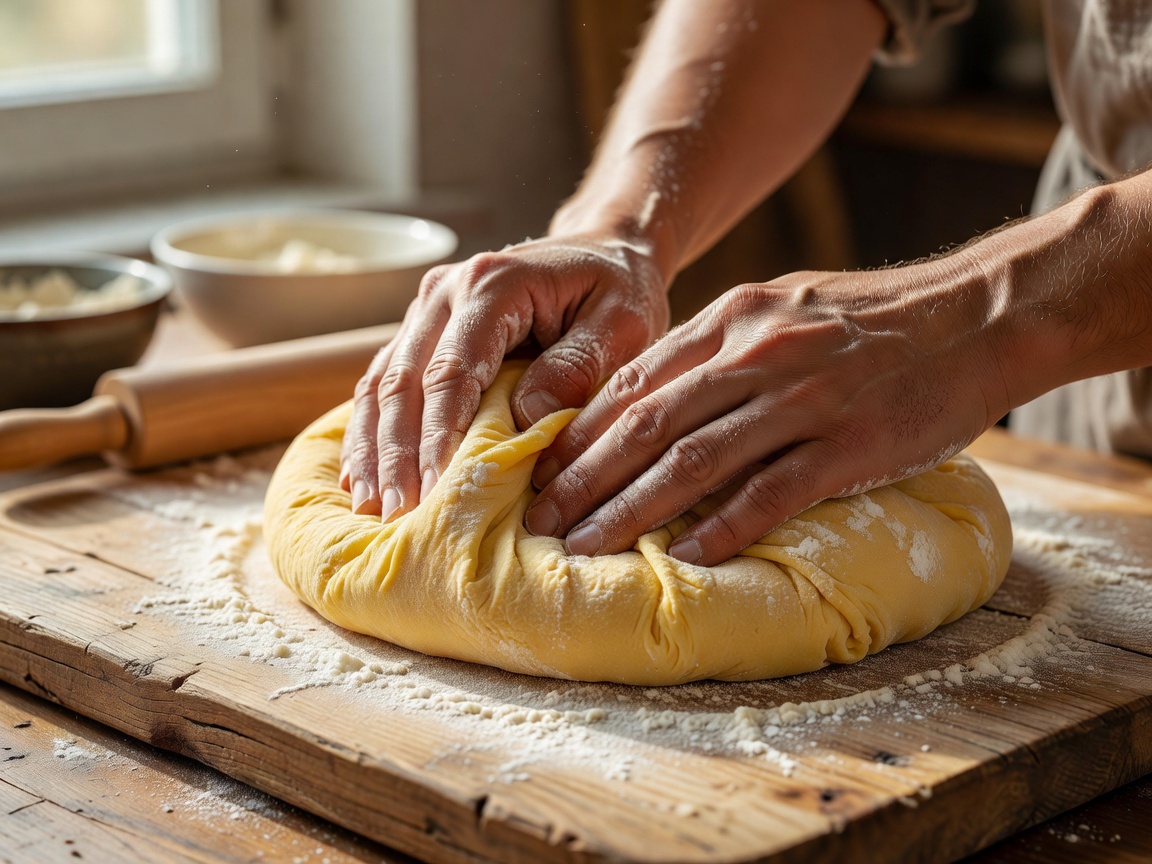
Kneading pasta dough serves to align the gluten proteins, transforming a shaggy, crumbly mass into a smooth, elastic ball. Using the heel of your hand, press firmly into the dough, push it forward, fold it back on itself, rotate it a quarter turn, and repeat.
This process usually takes about 10 minutes of continuous, vigorous effort. You will know you have developed enough gluten when the surface of the dough ball is entirely smooth, resembling the texture of leather, and springs back slowly when poked with a finger.
The Crucial Resting Phase
Resting the dough is non-negotiable. After intense kneading, the gluten network is tight and highly elastic. If you attempt to roll it out immediately, the dough will aggressively snap back, making it impossible to achieve a thin, even sheet.
Wrap the kneaded dough tightly in plastic film (to prevent a hard skin from forming) and let it rest at room temperature for at least 30 minutes, or up to two hours. During this time, the flour fully hydrates, and the gluten strands relax, resulting in a pliable dough that easily passes through a pasta machine.
Rolling and Cutting
When rolling, whether with a machine or a rolling pin, the goal is gradual reduction. Forcing thick dough through a narrow setting will tear the gluten network. Pass the dough through the widest setting several times—folding it in half like a letter (lamination) to build structure—before progressively working down to your desired thinness. The dough is generally thin enough when you can easily see the shadow of your hand through the sheet.